Thursday, August 31, 2006

The Sound of One Hand Clapping -- Creative Zen and Apple Achieve Enlightenment


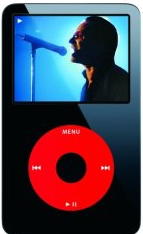
In a move which should give everyone pause, Steve Jobs has managed to find a way to make paying $100 million to settle a patent case work for him. The settlement last week of the Creative Zen iPod patent case against Apple, with Apple agreeing to pay that large chunk of change, also included a clause which gave Apple the ability to recover some of that sum if Creative manages to license the patent to other MP3 manufacturers. Thus Apple, caught by the early Creative Zen patent, benefits both ways. Creative sues Apple's competitors at its own expense, making those competitors incur legal expenses and putting their products at risk, while Apple sits back and lets them fight it out and gets a cut of whatever Creative takes in.

Looks like they don't call Jobs the "Visual Zen Master" for nothing.

Woohoo! Sprint Settles VoIP Patent Case with TheGlobe.com But Not with Vonage -- Is It the Song?


In a VoIP patent case which was filed in Kansas, of all places, Sprint settled with two of the defendants, TheGlobe.com and tglo.com who apparantly found Sprint's licensing terms finally too hard to resist.  The fight goes on, however, against the real competitive threat -- Vonage, who has had its own recent financial problems as well as another patent infringement case brought by Verizon.   For the telcos, clearly they have learned the lesson Intel learned years ago -- if you can't beat 'em in the marketplace -- sue 'em.

BTW, the song in the Vonage commercials is, I swear, called "The Woohoo Song" and is "performed" by the 5, 6, 7, 8s.  This, directly from the Vonage website, since you cannot make this stuff up.

Thursday, August 17, 2006

Licensing Competitors: A Knife in Your Rival’s Hand or the Monopolist’s Best Friend?


Intellectual Asset Management, since “Rembrandts in the Attic” and “Edison in the Boardroom,” has become big business. Accounting firms, law firms and consultants have descended on anyone with a patent portfolio, encouraging them to “monetize” their intellectual property asset by any means possible: licensing, sale and even giving the assets away to charity for the tax write-off. Companies as large as IBM have engaged in extensive licensing programs to try to wring the last penny out of the sometime gargantuan patent portfolios which had hitherto been gathering dust. Texas Instruments, in fact, took this a step further, cutting a well-known swath through the semiconductor industry in the mid-1990s aggressively litigating their portfolio,


For those companies with more modest ambitions – and who are willing and able to make their own decisions about how best to deploy their intellectual property assets, the question remains – what will be the competitive impact of launching, for example, a patent licensing campaign? Who should I be licensing to and why? Should I license everyone available or are there some companies I should not license to? Could the financial benefit I might receive from licensing my patents end up giving my competitors a club to beat me with? Or, might I gain a greater competitive advantage by licensing not one, but all of my competitors?


For most companies, licensing your core patents to a direct competitor simply to increase revenue is extremely dangerous and, in many cases, simply foolhardy. Jeff Weedman, VP of Proctor & Gamble, points out the competitive risks of this practice which, for some reason, P&G is willing to incur: “We will license to our competitors . . .. The fact that we´re going to license technology means that we´re no longer simply competing with the innovations of our competition, but we´re also competing with ourselves. This forces us to run faster and innovate faster to stay ahead.” Although this practice may work for P&G, deliberately allowing your competitors the right to use your core inventions so that they can gain a competitive advantage against you is an economic trade-off that most companies would regret in very short order.


A poorly drafted license to a competitor can pose even more serious dangers. Your competitor may end up sublicensing your patent to yet other companies – without compensating you – or may develop improvements to your invention, which it could then patent and use to threaten – or even sue – you.


And, just as a basic rule of business, it is often a poor idea to give your competitors access to the very thing that makes you distinct – your core intellectual property – simply to gain a short term bump in the bottom line. Apple has kept its distinctiveness by refusing to license the MAC operating system, for example. Although it has, perhaps, sacrificed licensing revenue, it has more than made up for it by being able to keep its own margins high. You will rarely, if ever, be able to charge enough for a license to substantially increase your competitor’s costs and you will devalue what makes your company special.


There are, however, unique circumstances under which licensing your patents to a competitor can work to your advantage: establishing or maintaining a monopoly and setting a technological standard.


As Sony learned with Betamax, sometimes being “special” does not work to your competitive advantage. No one disputed that the Betamax was technologically superior to the VHS format, but Sony, by refusing to share its intellectual property with its competitors, allowed them to set the standard for videotape formats and cost them dearly.


Indeed, the sharing of intellectual property – under the watchful eye of the antitrust regulators, of course – can often work to the advantage of the largest players in an industry, who usually dominate the standards-setting committees (through, for example, the IEEE) and license each other the patents to technologies they are already working on, to their mutual advantage – and to the disadvantage of their smaller rivals. Sometimes, as with the high definition TV wars, competing groups of competitors race to establish their own standards, hoping that their cabal will prevail.


Indeed, if you move fast enough, you may even be able to become the standard for your technological niche – a tactic successfully employed by RIM for its Blackberry technology (before it stepped into some quite different patent trouble).


The all time champion in using this latter strategy is, of course, Microsoft, who has leveraged the licensing of its software into a complete monopoly of most consumer applications software. Although Microsoft’s dominance of the operating system market is long standing, it is its practice of developing and licensing the use of its application software, such as Word and Excel for use on competing operating systems, such as Apple’s which is particular interesting. Although it might appear that it would not be to Microsoft’s competitive advantage to encourage the use of a competing operating system by allowing Mac users the ability to use these popular programs, what Microsoft has done is almost completely precluded anyone else from gaining a toehold, however, small, in the word processing market by developing a “Mac-based” word processing product – thus maintaining Microsoft’s monopoly in that market.


However, just because Microsoft may be able to use its dominance to counter the competitive disadvantages of licensing competitors doesn’t mean that you can, or should even try.


So, in short, it is not always a good idea to listen to the siren song of the consultants and lawyers who want you to license everything to everybody. Pick your licensees carefully and don’t sell your biggest rival a knife he will later use to stab you in the back.


Wednesday, August 16, 2006

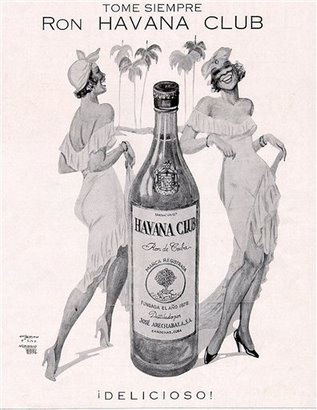
Babaloo! Havana Club v. Havana Club Rum Battle Invades Delaware Courts


In this (at least to me) confusing fight between two giant liquor importers, the dispute is which rum should be able to sport the name "Havana Club" -- the Havana Club (marketed by Pernod Ricard USA, who sells of Chivas Regal and Beefeater gin) which is actually made in Cuba or the Havana Club marketed by Bacardi, which is made from an old Cuban recipe from the 1930's, but which is actually made in Puerto Rico.

What makes the story even more interesting is that, at least according to Bacardi, rum based on the Bacardi recipe was developed by a family-owned Cuban company, Jose Arechabala SA, but that Castro's government seized the plant and the trademark and started producing rum on its own under the Havana Club label (though, according to Bacardi, under a different recipe). In fact, Cuba obtained a registration for the mark in the US (although the USPTO has recently refused to renew it. Cuba then hooked up with Pernod Ricard and gave them the right to sell the rum around the world (except for the US, of course, because of the embargo).

Pernod has sued (in Delaware) to stop Bacardi from using the name Havana Club, claiming that it is misleading consumers into thinking that the rum is made in Cuba. Bacardi, for its part, is evidently going to try to stop Pernod from distributing Havana Club in the US if the embargo is lifted.

Tuesday, August 15, 2006

Palomar and Candela in Laser Patent Duel in Boston -- Who Has the Force?


Massachusetts-based Palomar Medical Technologies continues to cut a swath through its competitors in the cosmetic laser marketplace by bringing a third patent infringement action against yet another medical laser company, Candela -- who promptly sued Palomar right back.  Palomar, who in quick succession settled its patent litigation against one laser rival -- Cutera --then, in quick succession sued another, Alma Laser, and then another -- Candela, who is clearly not taking this lying down.  

Palomar, who licensed its patent from Massachusetts General Hospital, is clearly showing those MD's some new Jedi mind tricks!

Monday, August 14, 2006

It's a Blackboard Jungle Out There! Will Desire2Learn Have to Walk the Chalk Line?


Blackboard, Inc., a Washington D.C. company which appears to believe
 that it has patented  "learning stuff over the Internet,"  has sued its
Canadian rival Desire2Learn amid howls from the online learning
community.  Blackboard, which brought its action in the
ever-popular Eastern District of Texas [this place never seems to get old!] the day it annouced its 44 claim patent on learning management systems, appears, by all accounts to be looking to leverage this dominance world-wide.  Hiring high-powered McDermott, Will & Emery, Blackboard appears to be in this for high-stakes.

The online learning community -- especially the open source folks
-- are counterattacking, however, establishing a site [No
Education Patents!
] designed to accumulate prior art to defeat the
Blackboard patent before it "clearcuts" the rest of the industry.

Tuesday, August 08, 2006

Troll Attack! McKool Smith Comes "Rumbling" After Nintendo and XBox [Again]


In a replay of its 2004 attack on 3D game technology, Texas firm 
McKool Smith has now taken aim - on behalf of previously 
unknown troll Anascape and inventor Brad Armstrong (no,
 not the pro wrestler) - at Nintendo and Microsoft (although,
 interestingly, not Sony) for their "rumble" console technology. 
 This lawsuit, filed in the always popular Eastern District of Texas, 
appears to be another attempt by this firm to make a name for 
itself in this niche.  This may be a rich area to mine however, after
 Irell's Morgan Chu managed to tag Sony's PlayStation for over $90
 million last year for violation of its "force feedback" technology. 
 However, at least Immersion uses its technology - unknown how 
the very productive Mr. Armstrong [33 patents so far, with at 
least 34 more in the pipeline] keeps himself busy -- other than inventing
 clubs to beat people with.

Thursday, August 03, 2006

P&G's Lightning Strike Against Private Label "Copycats" -- Or, How Even the Largest Companies can Litigate like "Operation Cobra"


"Operation Cobra" was one of the the most efficient movements of 
troops and materiel of WWII, marking the "breakout" of Allied troops from Normandy after D-Day. The lightning movement of the normally lumbering Allied armies over the 11 days from July 24 to August 4, 1944 made possible the liberation of France.

Although not nearly so altruistic, P&G has also engaged in its own lightning strike against private label manufacturers which it considers copycats of its signature products. Within the last four months, P&G has brought trade dress and patent infringement actions agsinst McLane (Nyquil), Vi-Jon (mouthwash), Ramir (toothbrushes) and Perrigo (Olay products). And, as P&G's Vice Chairman of global operations, Bob McDonald , told Reuters, "There are more coming,"

I guess P&G has given up on that private patent court idea its inhouse attorneys cane up with about 10 years ago.

Wednesday, August 02, 2006

Microsoft's "Atomic Bomb" Licensing Campaign for U2 Technology -- It's the ITC for Belkin


Microsoft, having successfully avoided an injunction in the first post-eBay decision (from the Eastern District of Texas, no less!), has discovered the rich man’s loophole – the ITC. Microsoft has engaged in what appears to be a pretty heavy-handed licensing campaign for its “U2” technology, which enables a computer to immediately recognize a peripheral device. This week, it filed a patent case in the ITC against mouse manufacturer Belkin who allegedly uses U2 technology. This action, designed to keep Belkin from importing mice manufactured overseas into the US, gives Microsoft the ability to accomplish through the ITC what it probably could not accomplish in the courts – a permanent injunction.

Incidentally, this case was filed the same week as Microsoft outlined its strategy for its "iPod killer" product -- Zune.  Is it a coincidence that Belkin is one of the largest manufacturers of iPod accessories?

Microsoft has obviously learned that moxie, muscle and the financial ability to force a domestic opponent into the meat grinder that is the ITC is a great incentive for the next guy to give a loooong look when the Microsoft license salesman comes calling.


Monday, July 31, 2006

Boston Scientific Settles With St. Jude -- or why Medical Device Litigation is Like the Battle of Verdun


The Battle of Verdun was the longest battle of WWI -- 10 months long -- and the second bloodiest -- 250,000 killed and 500,000 wounded. The German general, Erich von Falkenhayn, believed that he could defeat the French if they suffered enough casualties. He planned to attack a position from which the French could not retreat and fight a battle of attrition. After massive artillery fire and the use of poison gas, the battle ended with the German army being forced back to its starting position, with both the French general and the German commander long having since been sacked.

I was reminded of this battle when I saw, in the Minneapolis Star Tribune, that medical device giants Boston Scientific and St. Jude have finally decided to stop the biggest waste of corporate resources - one case going back to 1996 - and the greatest goldmine for patent litigators since Lemelson invented the submarine patent. Famous for spending more time and money suing each other than inventing pacemakers, and, with their interlocking series of cross-country battles, basically fighting each other to a standstill, someone clearly finally got some sense.

Now, this blog is dedicated to the economic utilization of patents. And I'm never one to shy away from a good fight. But this particular sumo match did nothing for competition or innovation, as far as I can tell, and benefited no one but the lawyers.

Friday, July 28, 2006

Launching a Successful Patent Licensing Campaign After eBay v. MercExchange


The clever combatant imposes his will on the enemy, but does not allow the enemy's will to be imposed on him.

Sun Tzu – The Art of War


The epic battle between Research in Motion, makers of the Blackberry, and NTP, owners of a patent which covered that product, ended when the trial judge, wielding the threat of an injunction which could have shut down the Blackberry email system, forced RIM to settle. The pressure which the judge was able to impose –an injunction -- would virtually have put the company out of business -- forced RIM into a settlement of over $600 million, even though it had already persuaded the US Patent Office to reject two of the patents NTP had asserted in the litigation.

A sea change in the relative bargaining positions of patent owner and target occurred when the United States Supreme Court decided eBay v. MercExchange. In that case, the court reversed long-standing precedent holding that a patentholder was automatically entitled to a permanent injunction after winning at trial and gave trial judges the discretion to decide whether a patent owner has suffered “irreparable harm” sufficient to warrant an injunction. Indeed, the first district court to consider this issue – the normally plaintiff-friendly Eastern District of Texas – denied a plaintiff an injunction to prevent Microsoft from using infringing “product activiation” software.

This may prove a difficult burden to meet where a patent owner’s primary current asset is its patent portfolio or where the patent owner has not begun selling products in substantial quantities. Indeed, it may prove difficult for a patentholder to obtain an injunction where the patent owner and the infringer do not compete.

The question, for companies seeking to license their inventions, is how to effectively persuade infringers to take a license to their patents when the threat of an injunction has been dramatically lessened. The answer is for patentees to intelligently select targets who pose the greatest competitive threat – 1) those who are, or will be, in the same market niche as the patentholder or 2) those who can, in some manner, interfere with the patent owner’s ability to compete.

With a significantly lessened injunction threat, a patentholder must be even smarter in order to snag potential licensees. A patent owner must not only be vigilant in identifying potential infringers, it should be careful to avoid sending “invitations to license” to every company in an industry without investigating whether the potential target actually uses the patented technology. These letters are usually ignored – costing the patentholder time, effort and energy. After all, a months-long delay in licensing a patent will not impress the next target and in-house attorneys do talk to each other.

The better strategy, now that the threat of an injunction is less credible, is to do a comprehensive analysis, before sending out any letters, of which targets are the most likely to be economically threatened by your patent portfolio and which pose the greatest competitive threat to you. After the targets have been approached, the initial inquiries should be followed up aggressively – the potential infringer should know that you are serious and that you will take action if your initial inquiries are ignored or rejected. Infringers of your patents should know that for them, despite the eBay decision, there are still consequences – including the real threat of an injunction – of failing to take a license to your patents.

Monday, July 24, 2006

Massachusetts Pair Teams With Intellectual Ventures

A former TV producer and a former sculptor have teamed up with Nathan Myhrvold's Intellectual Ventures -- widely rumored as a developing patent troll -- to "churn out" inventions for IV's portfolio. According to the Berkshire Eagle, so far, the Pittsfield, MA pair have developed

New ways for parents to control video game play.

A way to address the lack of drinkable water in many parts of Africa.

A device that stores and analyzes data and predicts outcomes for Major League Baseball teams. (Fein is a huge Red Sox fan. "I was never good enough to help them on the field, but this idea is a way I can help them win games.")

A new technology for more efficient harnessing of wind power.

Mhyrvold appears to be holding fast to his vision of developing a patent portfolio through working with inventors over the long term, rather than the
typical troll pattern of of simply acquiring patents for the sake of lawsuits.

Friday, July 21, 2006

Boston Communications Settles Case With Freedom Wireless

After being hit with a $128 million verdict by a Boston jury last year, prepaid wireless company Boston Communications settled its patent infringement action today against Phoenix-based Freedom Wireless, a tiny company founded by inventors Douglas Fougnies and Dan Harned, allows customers making prepaid calls to avoid dialing identification codes or calling toll-free numbers. The large verdict exceeded Boston Communications revenues and had threatened to
send the company into bankruptcy.

One unusual facet of the case, reported last year in The Recorder
was that Freedom Wireless was represented on a continency basis by Los Angeles litigation powerhouse Quinn Emmanuel.

The case had already proven extremely expensive for the 400-employee Boston Communication, which had already expended over $15 million in legal fees by October 2004.

Wednesday, August 24, 2005

Two excellent biographical sketches of the ultimate submariner -- Jerome Lemelson

I particularly liked this quote:

"Like Thomas Edison, he regarded a patent as a right to sue" This article is more, however, the story of the battle between Lemelson's attorney, Gerald Hosier, and his nemesis, Robert Shillman, head of Cognex Corp.
http://www.zwire.com/site/news.cfm?newsid=15082858&BRD=1817&PAG=461&dept_id=222087&rfi=6 [Part 1]
http://www.zwire.com/site/news.cfm?newsid=15082845&BRD=1817&PAG=461&dept_id=222087&rfi=6 [Part 2]

A much more critical view -- with fewer colorful quotes and fantasies of physical violence comes from the Scotsman site.

http://news.scotsman.com/international.cfm?id=1826712005

Nathan Myhrvold claims patent 'problem' is myth -- "and patent trolls don't exist either"

Former Microsoft wunderkind, amateur paleontologist and accused "patent troll" Nathan Myhrvold opines that the US patent system is functioning quite well.

"Patent litigation represents only three per cent of federal lawsuits and there has been a steady decline in the number of lawsuits filed per patent, Myhrvold said at Progress & Freedom Foundation national conference on Tuesday. "Almost everything you have heard about patent litigation statistics is not true," he said. "Patents are the least litigious part of intellectual property law."

Although, clearly, Myhrvold has a distinct financial interest in strengthening the patent laws, as his latest endeavor, Intellectual Ventures, is in the business of enforcing other people's patents, this self-interest should not, in my view, devalue the central thrust of his remarks -- patents are no good to anyone unless they are enforced and there is nothing inherently wrong with a third party who intends to enforce those patents purchasing that intellectual property from an inventor who either cannot or will not spend the time and money for enforcement.
http://news.com.com/Ex-Microsoft+CTO+claims+patent+problem+is+myth/2100-1030_3-5842261.html

Generics Defeat Pfizer in Gabapentin Litigation

Generic drug manufacturers, including Ivax Corp. and Teva Pharmaceutical Industries defeated Pfizer, Inc. on the generics' summary judgment motion of non-infringement Monday. Judge John Lifland, of the District of New Jersey, ruled that the generic version of gabapentin, the key ingredient in Pfizer's epilepsy drug Neurontin, did not infringe Pfizer's patent. The generics' motion to invalidate the patent on the grounds of indefiniteness was denied, however.

This follows Ivax's successful turning back of Pfizer's preliminary injunction motion last August.

This result is a substantial blow to Pfizer, whose sales of Neurontin had dropped from $782 million a year earlier to $161 million in the first half of this year.